What if we could measure things that conventional instruments struggle to detect?
Many scientific discoveries begin with a measurement.
Scientists measure magnetic fields to understand materials, detect tiny changes in motion to study physical systems, and measure time to coordinate technologies that depend on extreme precision.
Yet conventional measurement instruments encounter fundamental physical ceilings.
Some physical signals are incredibly weak. Thermal fluctuations, Johnson noise, classical mechanical drift, and electronic background noise routinely drown out minute variations. In many fields, measuring signals below the microvolt or picotesla regime requires sensors pushed far beyond practical limits.
Quantum physics provides another approach.
By using the fundamental properties of quantum systems, researchers are developing a new generation of measurement technologies known as quantum sensors.
Rather than treating environmental sensitivity as a liability (as quantum computing engineers must do to prevent qubit decoherence), quantum metrology turns this susceptibility into an advantage. A quantum state delicately tuned to its environment becomes an instrument of unprecedented sensitivity.
These technologies are transforming how we observe, measure, and understand the physical world.
What is quantum sensing?
Quantum sensing is the use of quantum states to measure physical quantities with sensitivity, spatial resolution, and accuracy unattainable by classical counterparts.
The field takes advantage of several quantum phenomena:
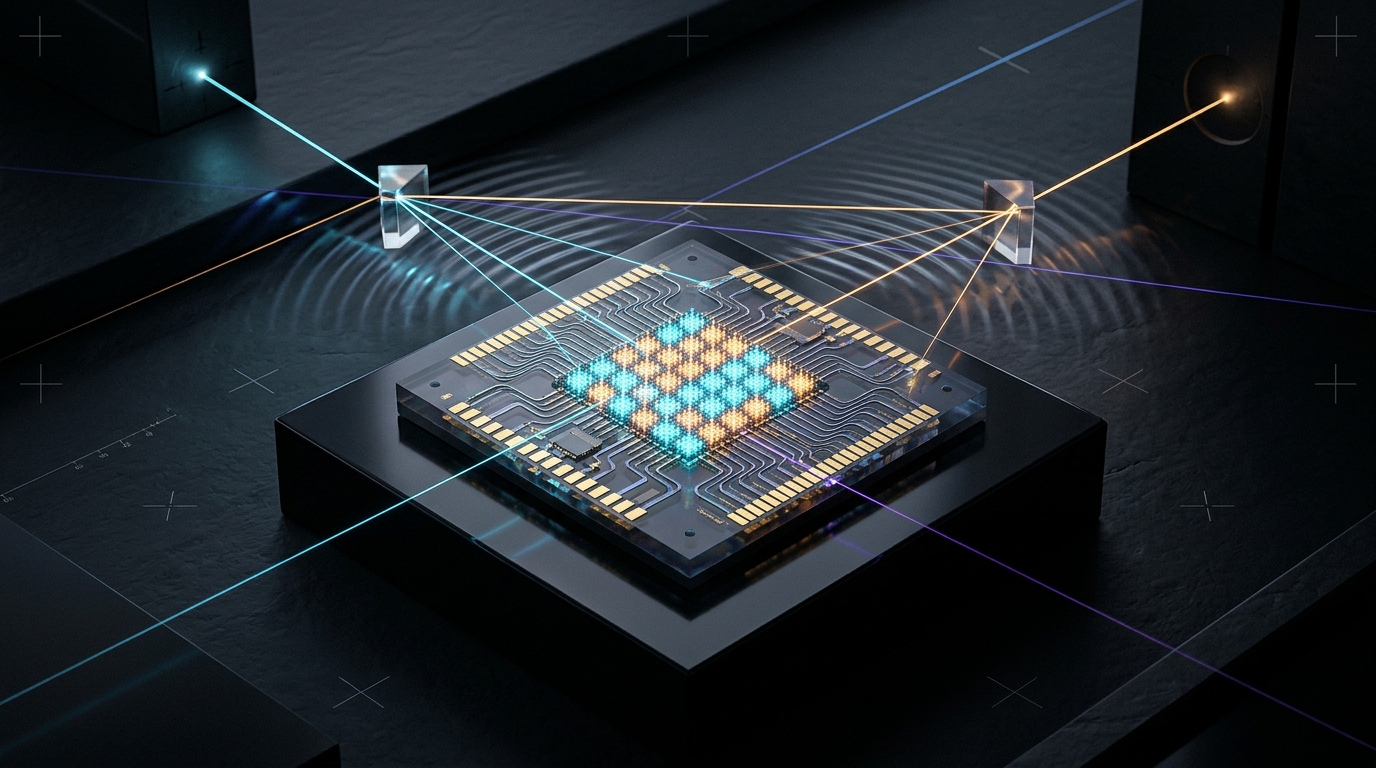
- Quantum Superposition: Enables probe systems to evolve along orthogonal phase paths simultaneously, magnifying minute phase perturbations.
- Quantum Coherence: Preserves phase information over extended interrogation windows, yielding razor-sharp spectroscopic resonance.
- Quantum Entanglement: Correlates multiple particles so their joint phase sensitivity scales beyond classical statistical boundaries.
- Interference Between Quantum States: Converts minute shifts in energy, gravitational potential, or magnetic flux into macroscopic optical or electronic interference fringes.
Beating the Standard Quantum Limit
In classical measurement systems, measurement uncertainty scales according to the Standard Quantum Limit (SQL), governed by Poissonian shot noise:
$$\Delta \theta_{\text{SQL}} \propto \frac{1}{\sqrt{N}}$$
Where $N$ represents the number of independent sensing probes (such as photons or uncorrelated atoms). Averaging independent measurements reduces variance, but diminishing returns set in quickly.
By preparing quantum probes in entangled or squeezed states, quantum metrology can approach the Heisenberg Limit:
$$\Delta \theta_{\text{HL}} \propto \frac{1}{N}$$
This quadratic enhancement represents a profound operational difference: detecting signals orders of magnitude faster, or resolving faint physical phenomena that classical averaging could never distinguish from ambient noise.
How does a quantum sensor work?
Across diverse hardware implementations, a quantum sensor operates through three synchronized stages:
- State Preparation: Laser cooling, optical pumping, or coherent microwave pulses prepare the quantum probe in a well-defined initial state.
- Environmental Coupling: The target observable (magnetic field, acceleration, gravitational potential) drives a precise Hamiltonian phase accumulation: $\Delta \phi = \frac{1}{\hbar} \int_0^T V_{\text{int}}(t) , dt$.
- Quantum Readout: State-selective laser fluorescence, optical absorption, or microwave cavity transmission converts quantum phase into an observable macroscopic signal.
1. Preparing a quantum state
A well-isolated physical system is prepared in a pristine, reproducible quantum state. Depending on the architecture, this involves laser cooling alkali atoms down to microkelvin temperatures, optically pumping atomic electron spins into specific magnetic sublevels, or generating squeezed optical light.
2. Interaction with the environment
The prepared quantum state interacts with the target physical observable (such as an external magnetic field $B$, gravitational acceleration $g$, or microwave field $E$). This interaction alters the system’s Hamiltonian, driving a precise, phase-accumulating unitary transformation:
$$\Delta \phi = \frac{1}{\hbar} \int_0^T V_{\text{int}}(t) , dt$$
The environmental perturbation is encoded directly into the quantum phase or population distribution of the sensor.
3. Reading the result
Researchers interrogate the resulting quantum state using state-selective laser fluorescence, optical absorption, or microwave cavity resonance. The phase shift is converted into a measurable macroscopic signal, directly estimating the physical observable.
Leading quantum sensing architectures
Quantum sensing encompasses multiple distinct physical platforms, each optimized for specific observables, operating environments, and dynamic ranges.
| Sensor Architecture | Primary Physical Mechanism | Primary Observable | Representative Sensitivity | Operating Temperature |
|---|---|---|---|---|
| Nitrogen-Vacancy (NV) Centers | Electron spin state in diamond crystal lattice | Magnetic field ($B$), temperature, strain | $\sim 1\text{ nT}/\sqrt{\text{Hz}}$ (nanoscale resolution) | Room Temperature (300 K) |
| Optically Pumped Magnetometers (OPM) | Larmor spin precession in vaporized alkali atoms | Biomagnetic & geomagnetic fields | $< 10\text{ fT}/\sqrt{\text{Hz}}$ | $40\text{–}150^\circ\text{C}$ (Vapor cell, no cryogenics) |
| Cold-Atom Gravimeters | Laser-induced matter-wave interferometry | Acceleration ($a$), gravity ($g$), gradients | $\sim 10^{-9}\text{ m/s}^2$ ($1\ \mu\text{Gal}$) | Laser-cooled ($< 1\ \mu\text{K}$) in vacuum |
| Optical Lattice Clocks | Electronic transitions in neutral strontium atoms | Ultra-precise frequency & time | Fractional error $< 10^{-18}$ | Laser-cooled in optical lattice |
| Squeezed-Light Interferometers | Quantum state engineering of optical photons | Space-time strain, optical phase shifts | Sub-attometer phase displacement | Ambient optical paths |
Where can quantum sensing make a difference?
Quantum sensing is moving rapidly from academic physics laboratories into real-world industrial and clinical deployments.
1. Healthcare and biomagnetic imaging
Magnetoencephalography (MEG) measures the faint magnetic fields produced by neuronal electrical currents in the human brain (typically $10\text{ to }100\text{ fT}$). Historically, MEG required bulky, liquid-helium-cooled Superconducting Quantum Interference Devices (SQUIDs), forcing patients to remain completely motionless inside massive, rigid helmets.
Modern Optically Pumped Magnetometers (OPMs) operate without cryogenic cooling. Wearable OPM helmets conform directly to a patient’s scalp, reducing the sensor-to-brain distance and increasing signal capture amplitude by a factor of four. This allows dynamic brain imaging during movement, transforming diagnosis for pediatric epilepsy, traumatic brain injury, and neurodegenerative disorders.
2. Quantum navigation: PNT without satellite reliance
Global Navigation Satellite Systems (GNSS / GPS) are susceptible to spoofing, atmospheric attenuation, physical obstruction, and intentional jamming. Submarines, underground transit networks, and deep-space vehicles operate in GPS-denied environments.
Cold-atom interferometric accelerometers and gyroscopes track acceleration and angular velocity by splitting, reflecting, and recombining atomic matter waves (de Broglie waves). Because atomic transitions are invariant and drift-free, quantum inertial measurement units (Q-IMUs) enable long-duration autonomous dead reckoning without needing periodic satellite recalibration.
3. Subsurface geophysical exploration and infrastructure
Measuring local gravitational acceleration reveals density anomalies hidden deep beneath the Earth’s surface.
Quantum gravimeters detect variations on the order of microgals ($1\ \mu\text{Gal} = 10^{-8}\text{ m/s}^2$). Field geophysicists utilize mobile cold-atom gravimeters to map subterranean aquifers, inspect volcanic magma chambers, discover critical mineral deposits, and identify hidden civil voids or sinkholes beneath metropolitan infrastructure before structural collapses occur.
4. Nanoscale materials science and biology
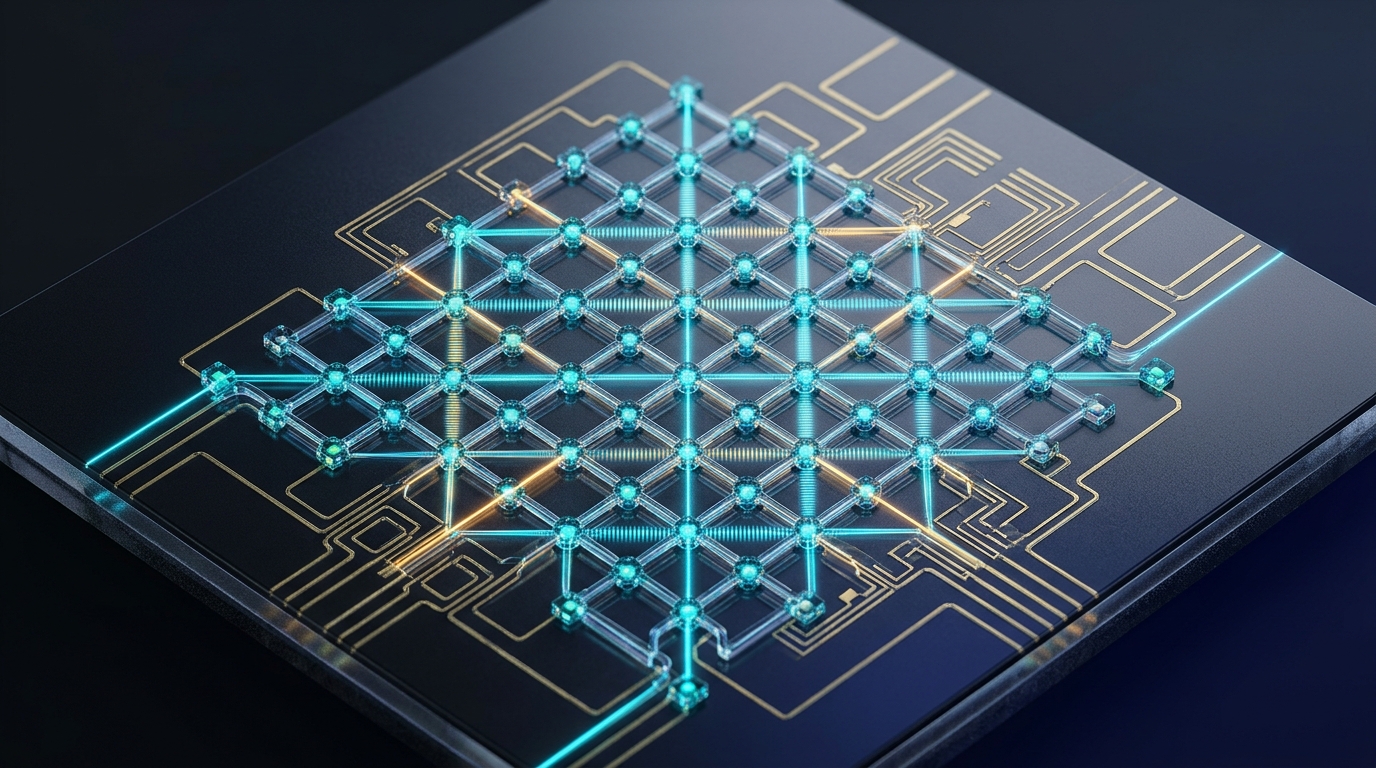
Nitrogen-Vacancy (NV) centers in diamond consist of a substitutional nitrogen atom adjacent to a vacancy in a carbon diamond lattice. These defects behave like isolated atomic qubits trapped in a solid crystal, operating stably at room temperature.
Because an NV center can be placed within nanometers of a sample surface (or mounted on the tip of an atomic force microscope), it can map local magnetic fields generated by a single electron spin or small clusters of nuclear spins. This enables non-invasive thermal and magnetic mapping inside living cellular structures and microscopic characterization of novel 2D quantum materials.
5. Precision timekeeping and relativistic geodesy
Modern optical lattice atomic clocks interrogate ultra-narrow optical transitions in neutral strontium or ytterbium atoms trapped in non-dissipative standing waves of laser light.
These clocks achieve fractional frequency uncertainties below $1 \times 10^{-18}$—an error so infinitesimal that such a clock would neither gain nor lose a single second over the age of the known universe (approximately 13.8 billion years).
At this degree of precision, Einstein’s theory of general relativity becomes a practical measurement tool: a clock elevated by a single centimeter ticks noticeably faster due to gravitational time dilation. Optical clocks thereby enable relativistic geodesy, measuring continental elevation changes and tectonic shifts directly through frequency comparisons.
Quantum sensing versus conventional sensing
It is critical to evaluate quantum sensors realistically against established classical instruments.
| Dimension | Conventional Solid-State Sensors | Advanced Quantum Sensors |
|---|---|---|
| Primary Advantage | Inexpensive, compact, low power consumption | Unmatched sensitivity ceilings, fundamental atomic accuracy |
| Calibration | Requires periodic external recalibration due to drift | Inherently drift-free based on invariant fundamental constants |
| Noise Limits | Bound by thermal Johnson-Nyquist and shot noise | Approaches or beats Standard Quantum Limit via entanglement |
| Deployment Readiness | Mature, ruggedized, mass-produced silicon workflows | Rapidly transitioning from optical tables to packaged PICs/MEMS |
| Target Role | Everyday broad-market and high-volume systems | High-stakes defense, biomedical imaging, and geodesy |
Conventional solid-state instruments (such as MEMS accelerometers, Hall-effect sensors, and quartz oscillators) are inexpensive, rugged, and power-efficient. For most consumer and general industrial applications, classical sensors remain the superior engineering choice.
Quantum sensing delivers decisive value when:
- Classical noise floors prevent measurement of faint physical phenomena.
- Mission-critical systems cannot tolerate sensor drift or require recalibration-free operation over decades.
- Extreme spatial resolution at the nanoscale is required without destroying delicate specimens.
The objective is not wholesale replacement of classical sensors, but targeted deployment where conventional physics reaches an impasse.
Engineering challenges and the path forward
Translating quantum metrology from vibration-isolated optical benches to field-ready hardware presents tangible engineering hurdles:
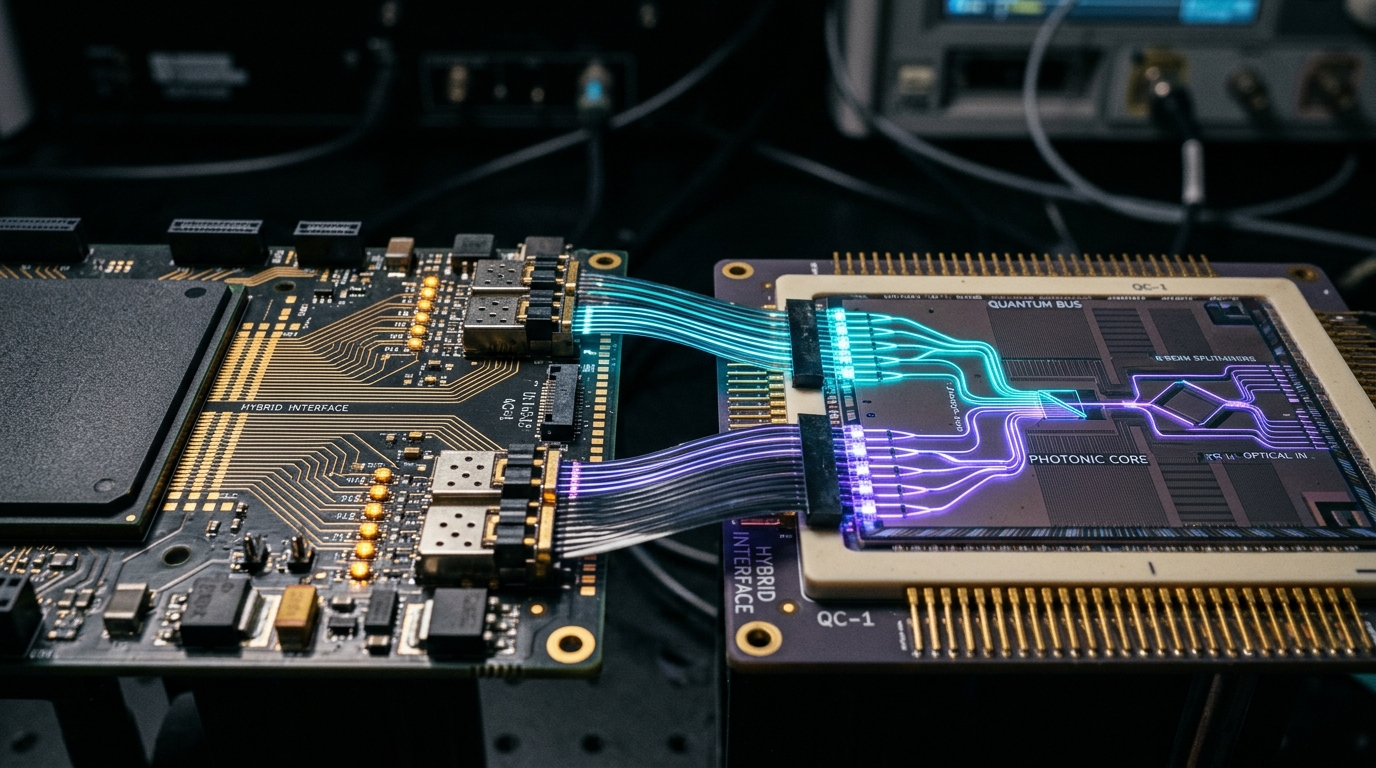
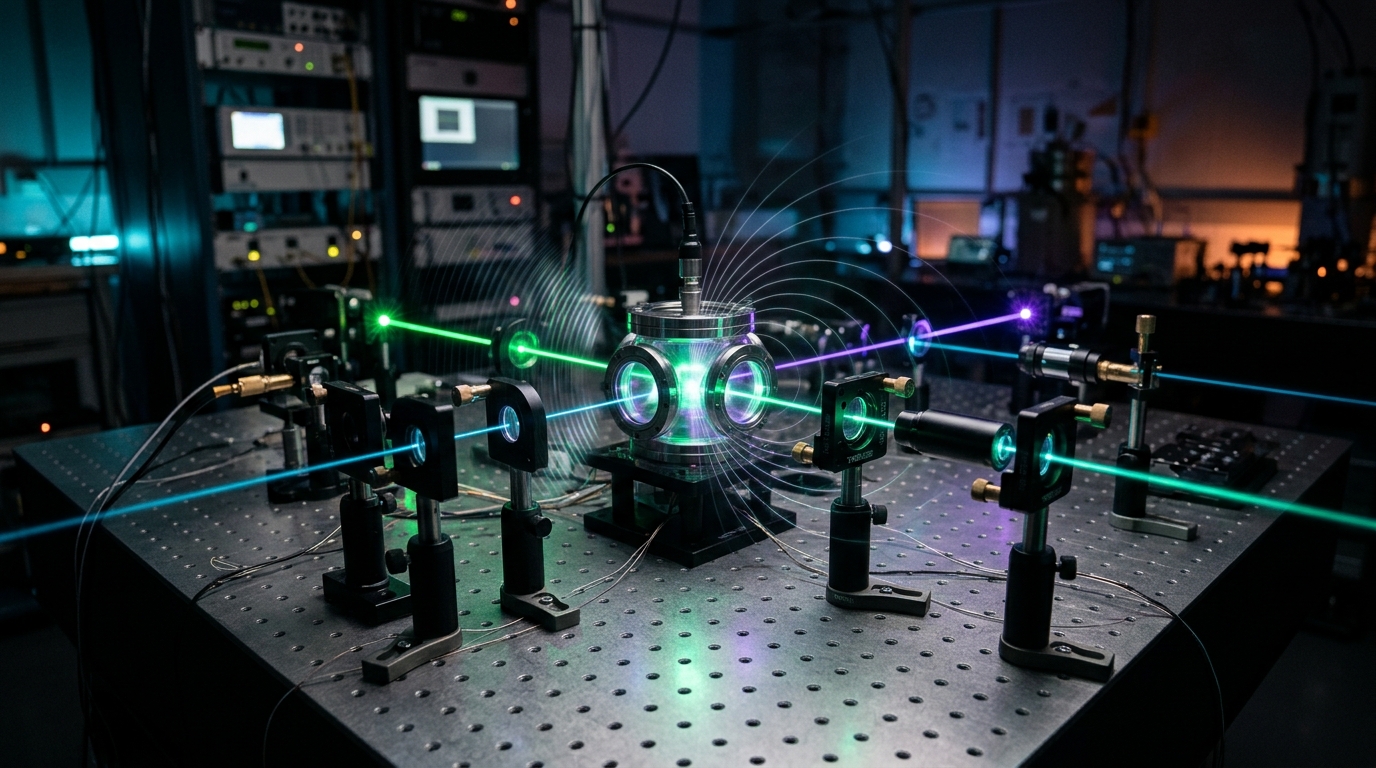
- Size, Weight, Power, and Cost (SWaP-C): Laboratory experiments rely on rack-mounted titanium lasers, ultra-high-vacuum (UHV) chambers, and delicate magnetic shielding. Scaling these down into hand-portable or vehicle-mounted packages requires micro-fabricated vapor cells, photonic integrated circuits (PICs), and integrated vacuum packaging.
- Environmental Robustness: External magnetic fluctuations, ambient temperature swings, and mechanical vibrations can perturb sensitive quantum states before useful signal accumulation occurs. Active cancellation coils and differential gradiometry are essential for outdoor deployment.
- Data Ingestion and Hybrid Processing: High-rate optical fluorescence detection produces high-bandwidth data streams requiring real-time signal processing and low-latency classical filtering algorithms.
Addressing these challenges requires multidisciplinary convergence across quantum optics, materials science, semiconductor photonics, precision micro-machining, and high-speed classical electronics.
A new window into the physical universe
Discussions around quantum technology often focus heavily on quantum computing. Yet quantum sensing represents one of the most immediate, tangible, and economically impactful applications of quantum mechanics today.
Quantum sensors transform the delicate fragility of quantum states into an unmatched analytical asset. By turning atoms, spins, and photons into ultra-precise measurement probes, researchers can now detect signals that were previously invisible.
At OJANVU Quantum Labs, we believe the full scope of quantum technology encompasses both processing information and observing reality with greater clarity.
The most transformative scientific breakthroughs often begin not with computing something faster, but with measuring something we could never observe before.