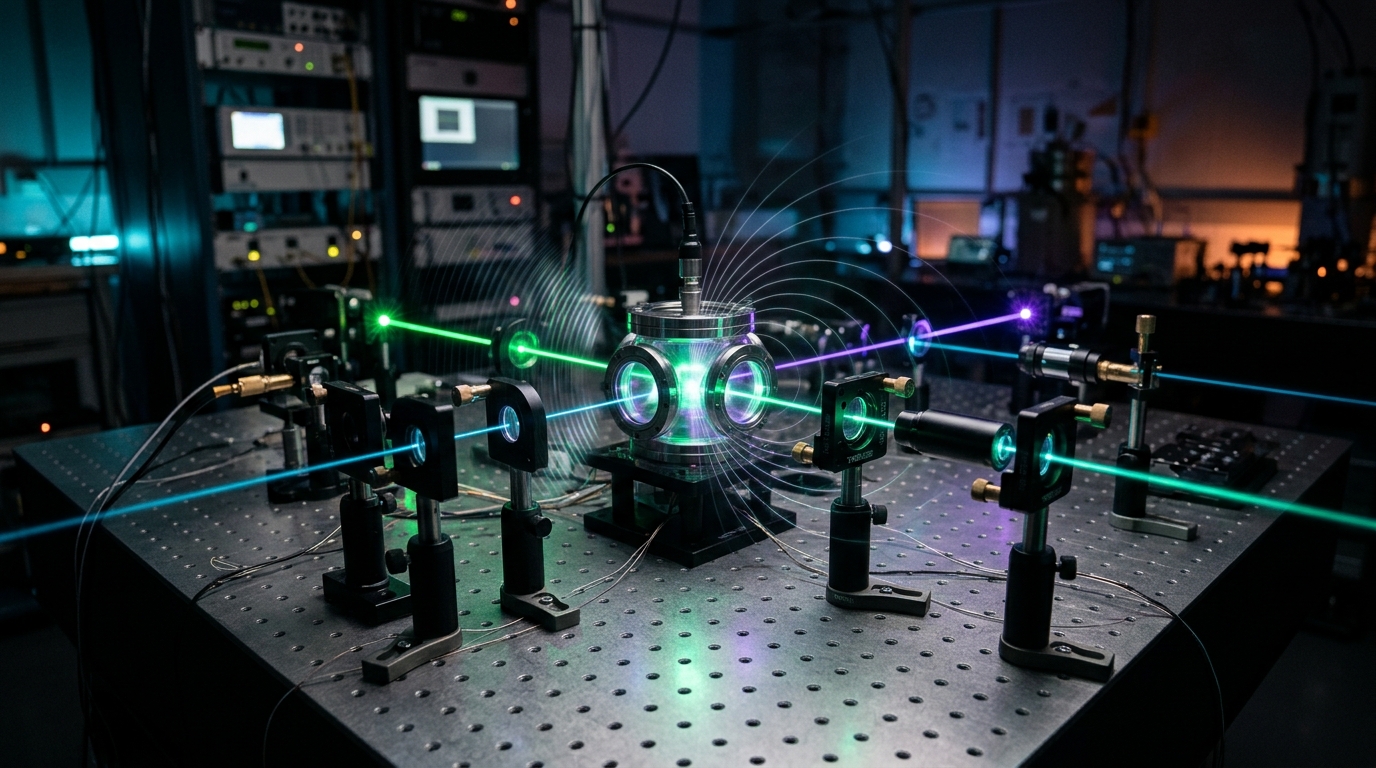
For years, quantum computing has largely been associated with highly controlled laboratories, sophisticated optical systems and experimental hardware.
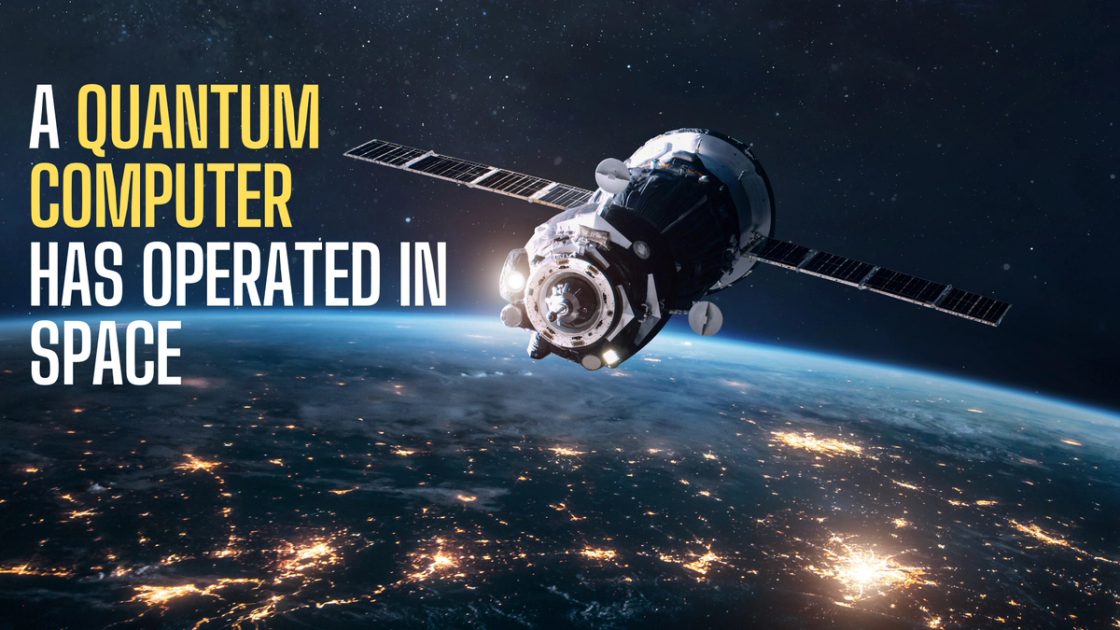
Now, something remarkable has happened: a programmable quantum photonic processor has successfully operated in orbit.
A team led by researchers at the University of Vienna has demonstrated a photonic quantum processor operating aboard a nanosatellite in low Earth orbit. The experiment represents an important step toward bringing quantum computing technologies beyond the laboratory and into real-world environments such as space.
But this story is about more than simply putting a quantum processor on a satellite.
Why Put Quantum Computing in Space?
Modern satellites collect enormous amounts of information. Earth-observation satellites, for example, continuously capture images and other measurements used for environmental monitoring, climate research, agriculture, disaster management and many other applications.
The challenge is that sending all of this raw information back to Earth requires communication bandwidth, energy and time. One potential solution is to process more information directly on the satellite. Instead of sending every piece of raw data to a ground station, a satellite could eventually analyze information onboard and transmit only the most relevant results.
This concept is known as edge computing in space.
Quantum photonics could potentially become part of this future architecture. The researchers describe applications such as local processing of Earth-observation data and future quantum-assisted machine-learning workloads directly in orbit.
How Does the Quantum Processor Work?
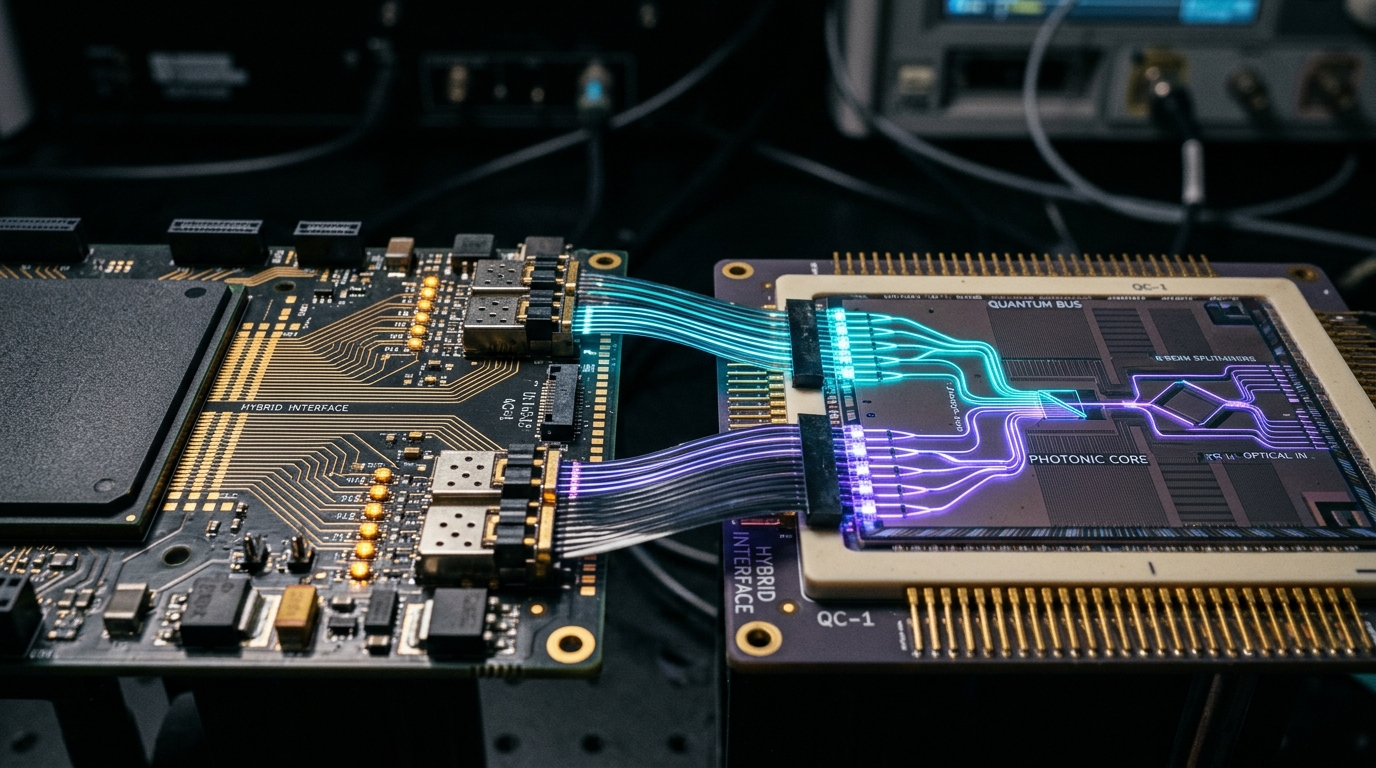
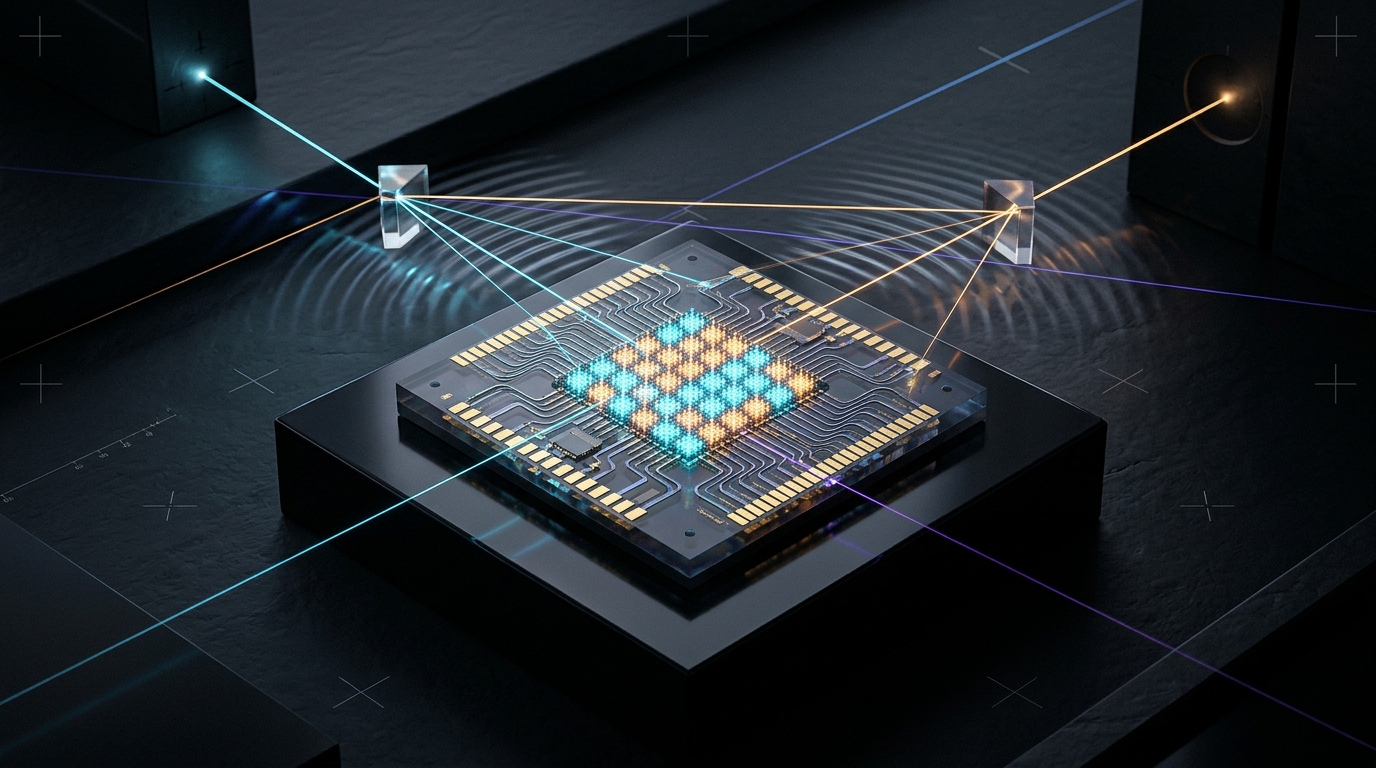
The system developed by the research team uses photons - particles of light to carry quantum information. At the heart of the processor is a source that generates pairs of photons. These photons are then sent through a programmable optical circuit integrated onto a small glass chip.
For the quantum effect to work, the photons need to be highly indistinguishable. When two indistinguishable photons meet at an optical junction, they can interfere with one another in a distinctly quantum way. The researchers observed this phenomenon, known as Hong-Ou-Mandel interference, while the processor was operating in orbit.
The experiment used a six-mode programmable photonic circuit and demonstrated the generation, manipulation and detection of non-classical light in space. This is an important distinction. The experiment does not mean that a general-purpose quantum computer is now processing satellite images or replacing conventional onboard computers.
Instead, it demonstrates that one of the fundamental physical processes required for photonic quantum computing can be achieved in the challenging environment of space.
Getting Quantum Hardware Into Orbit Was Only the Beginning
Building a quantum processor for space is very different from building one for a laboratory. A rocket launch exposes hardware to intense vibration and mechanical shock. Once in orbit, the system has to deal with temperature variations, radiation and sunlight.
The researchers designed the hardware to withstand these conditions, including reinforcing optical components and protecting sensitive electronics and detectors.
But the mission still encountered several unexpected challenges. Only three of the six photon detectors were usable after launch. Sunlight also introduced background noise, making measurements more difficult during portions of the satellite’s orbit. Radiation gradually affected detector performance as well
Another challenge came from the laser used by the system. An adhesive inside the laser housing released material in the vacuum of space, contaminating optical components and reducing the laser’s output. These problems are actually an important part of the story.
They demonstrate that moving quantum technology into space isn’t simply a matter of shrinking laboratory equipment. It requires space-qualified quantum engineering.
A Quantum Processor 510 Kilometres Above Earth
The processor was launched into low Earth orbit in June 2025 at an altitude of approximately 510 kilometres. The satellite travels around Earth roughly every 92 minutes.
Because sunlight created significant background noise for the photon detectors, the researchers found useful measurement windows when the satellite passed through Earth’s shadow.
Despite the technical challenges, the team successfully observed the expected quantum interference effect.
The measured Hong-Ou-Mandel interference visibility was reported as 0.908, although the researchers also note substantial uncertainty in the measurement. The experiment was repeated on different days, and the expected effect disappeared when the processor was deliberately configured not to produce it.
The Bigger Picture
For me, the most interesting aspect of this experiment is not simply that a quantum processor reached space. It is the change in mindset it represents.
Quantum computing is increasingly moving from:
“Can we demonstrate this in a laboratory?”
towards:
“Can we engineer this to work in the real world?”
Space is one of the hardest environments in which to answer that question.
If quantum hardware can operate there, it opens the door to thinking about quantum technology as part of future infrastructure rather than something confined to research laboratories. There is still a long way to go.
The current experiment is a technology demonstration, not a fully operational quantum satellite computer capable of analyzing large volumes of real-world satellite data. The research itself describes the result as an important first step toward future in-orbit quantum-assisted computing. The underlying paper is currently available as an arXiv preprint and has not yet undergone peer review.
But every major technology has to start somewhere. And this may be one of those moments where a laboratory concept begins taking its first steps into the real world.
Source
ScienceAlert - For The First Time, a Quantum Computer Has Operated in Space (27 September 2026).