Quantum computing is often described as a race to build more powerful processors. But there is another challenge that could be just as important: finding ways for different quantum systems to communicate reliably.
A recent announcement from IonQ highlights the growing interest in this area.
On October 27, 2026, IonQ announced a $7.5 million follow-on award from the U.S. Air Force Research Laboratory to expand its quantum networking work. The planned upgrades include optical communication links, quantum frequency converters, and software for monitoring and managing network operations.
The announcement is part of a broader effort to move quantum networking from laboratory demonstrations toward more practical deployments.
Why Would Quantum Computers Need a Network?
Today’s conventional computers exchange information through networks of cables, switches, routers, and wireless connections.
Quantum systems face a different challenge. Quantum information is fragile, and connecting quantum devices requires techniques that preserve the properties needed for quantum operations.
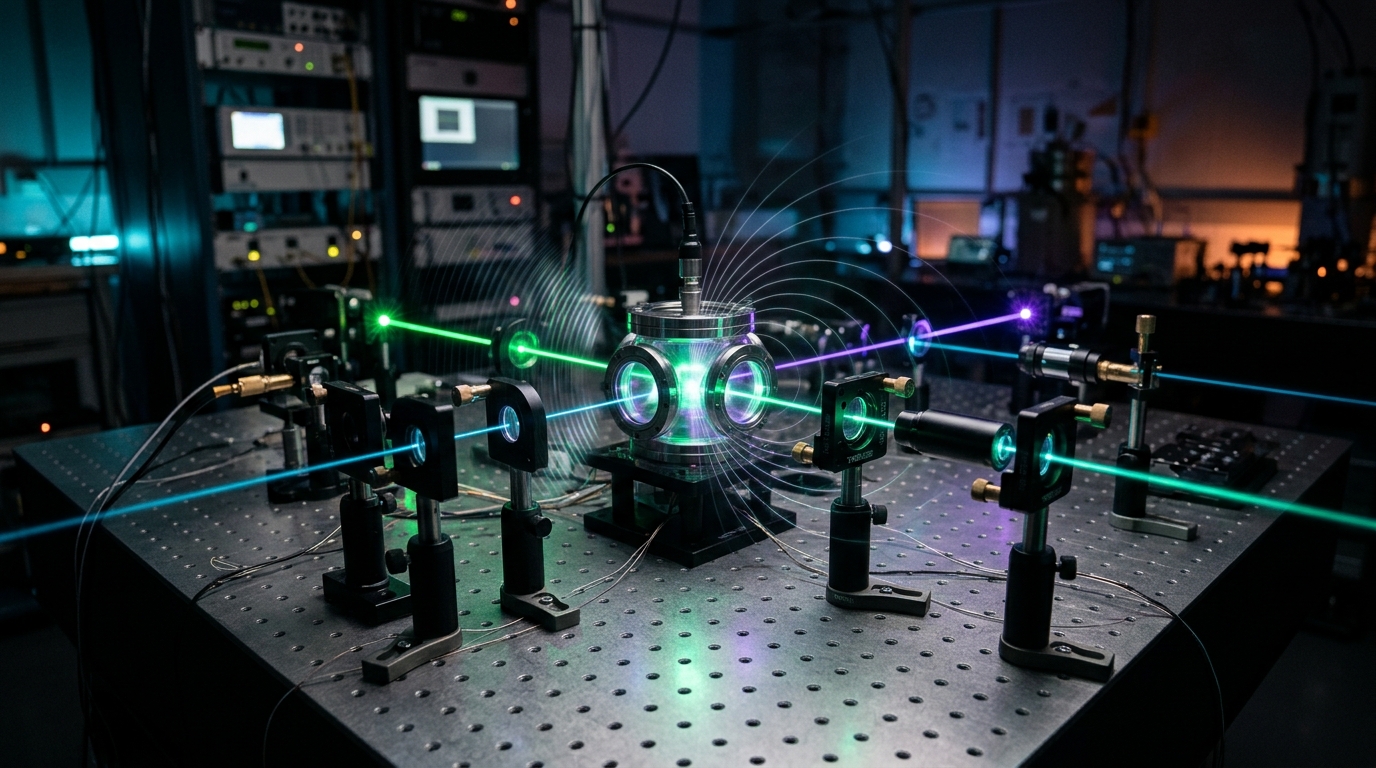
In many approaches, photons provide the link between separate systems. They can carry quantum information through optical fibres or through free space using carefully controlled light.
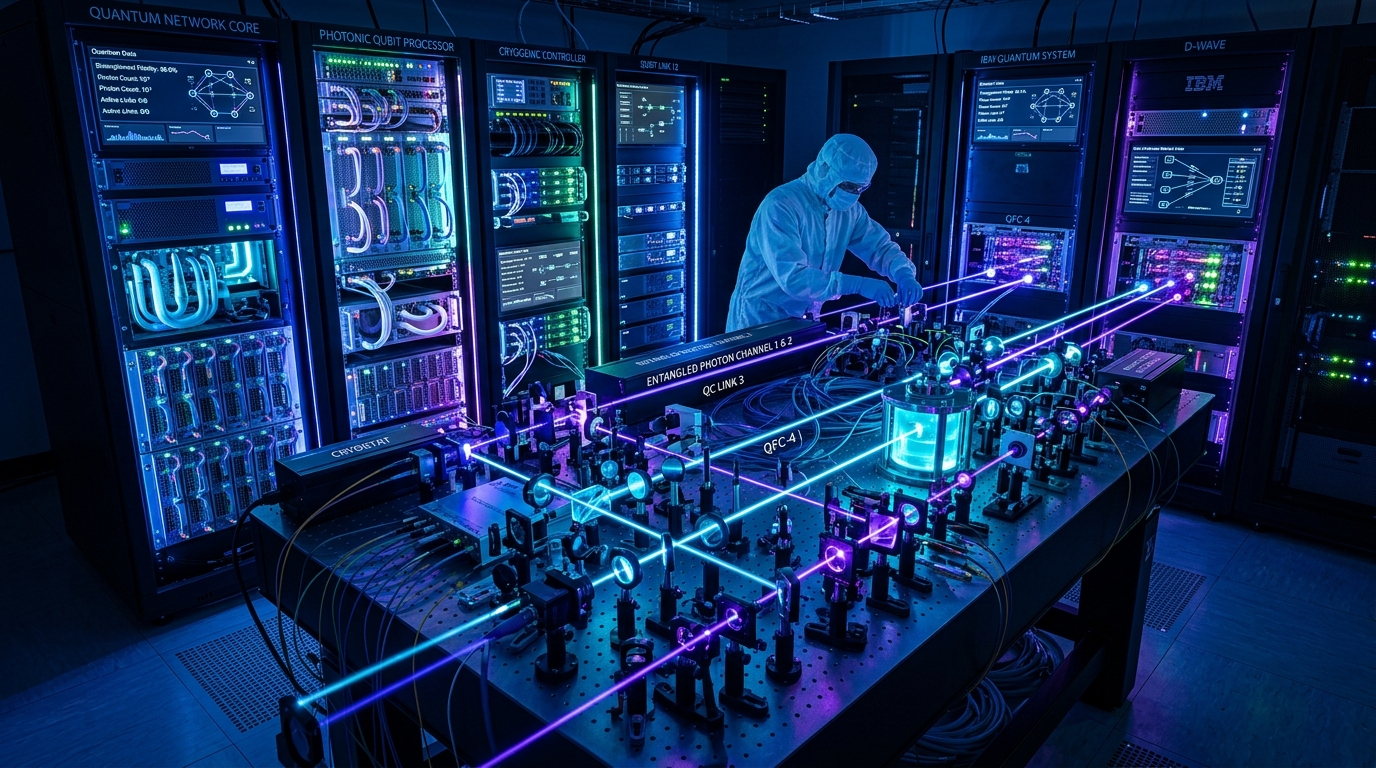
If researchers can establish reliable connections between quantum processors, memories, and other devices, it could eventually become possible to distribute certain quantum tasks across multiple connected systems.
This is one of the foundational ideas behind connecting distributed quantum processors with photons.
The Role of Light
Photons are naturally suited for both room-temperature optical quantum computing and quantum networking because they travel through standard optical fibers with minimal thermal decoherence.
However, building a useful quantum network is not as simple as sending light from one device to another.
Researchers must address several challenges:
- Photon loss: Some photons fail to reach their destination, reducing the success rate of quantum communication.
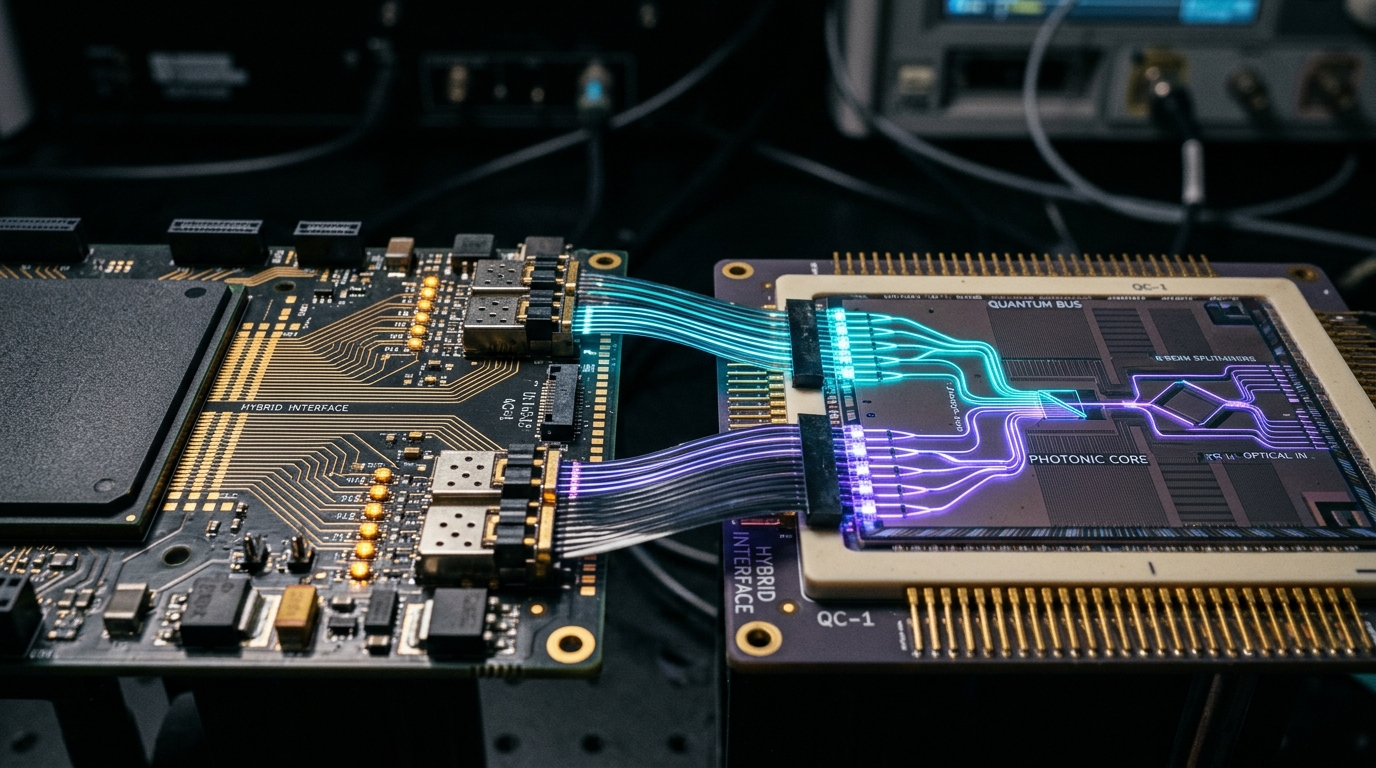
- Hardware compatibility: Different quantum systems may operate at different frequencies and require specialized interfaces.
- Reliable control: Optical links must be established, monitored, and maintained with high precision.
- Quantum memory: Information may need to be stored until the other parts of a network are ready.
- Scaling: A system that works between two devices must be adapted before it can support a larger network.
IonQ’s announced work includes components and software aimed at addressing several of these practical networking requirements.
Why This Matters for Photonic Quantum Computing
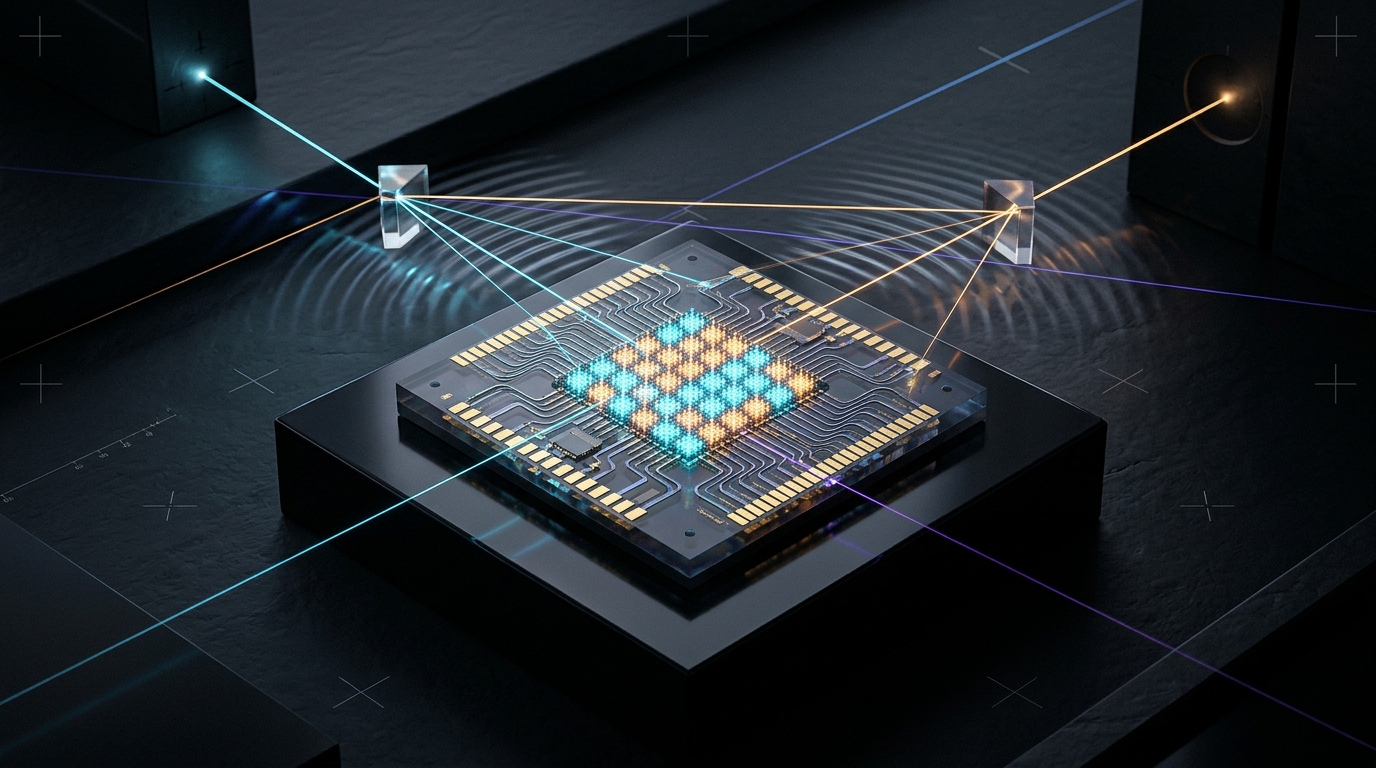
Photonic quantum computing uses light to represent and process quantum information. Some architectures use individual photons, while continuous-variable approaches encode quantum information in properties of optical fields, such as their amplitude and phase.
These approaches are not identical, but both make optical engineering an important part of the wider quantum technology landscape.
Progress in optical links, integrated photonics, and quantum-state control can provide useful lessons for researchers developing different photonic architectures.
For continuous-variable systems in particular, optical loss remains an important issue because it can degrade the quantum states needed for computation and communication.
Improvements in optical components and system integration are therefore relevant to the long-term goal of making photonic quantum technologies more practical.
What Comes Next?
Quantum networking still faces significant scientific and engineering challenges. A funding announcement is not proof that a large-scale quantum internet or a commercially useful distributed quantum computer already exists.
The next milestones will depend on measurable improvements in connection reliability, quantum-state preservation, interoperability, and performance outside tightly controlled laboratory conditions.
Over time, research in these areas could help establish the infrastructure needed to connect different quantum devices.
OJANVU Quantum Labs Perspective
At OJANVU Quantum Labs, we follow developments in photonic quantum computing, continuous-variable quantum optics, and the technologies that could help quantum systems scale.
The progress of quantum computing will depend on more than the processor itself. Optical components, control systems, quantum memories, and reliable connections will all influence what future systems can achieve.
Quantum networks are still developing, but the work underway today is helping researchers understand what it will take to connect quantum technologies in the real world.
Source: IonQ announces $7.5 million follow-on award for quantum networking