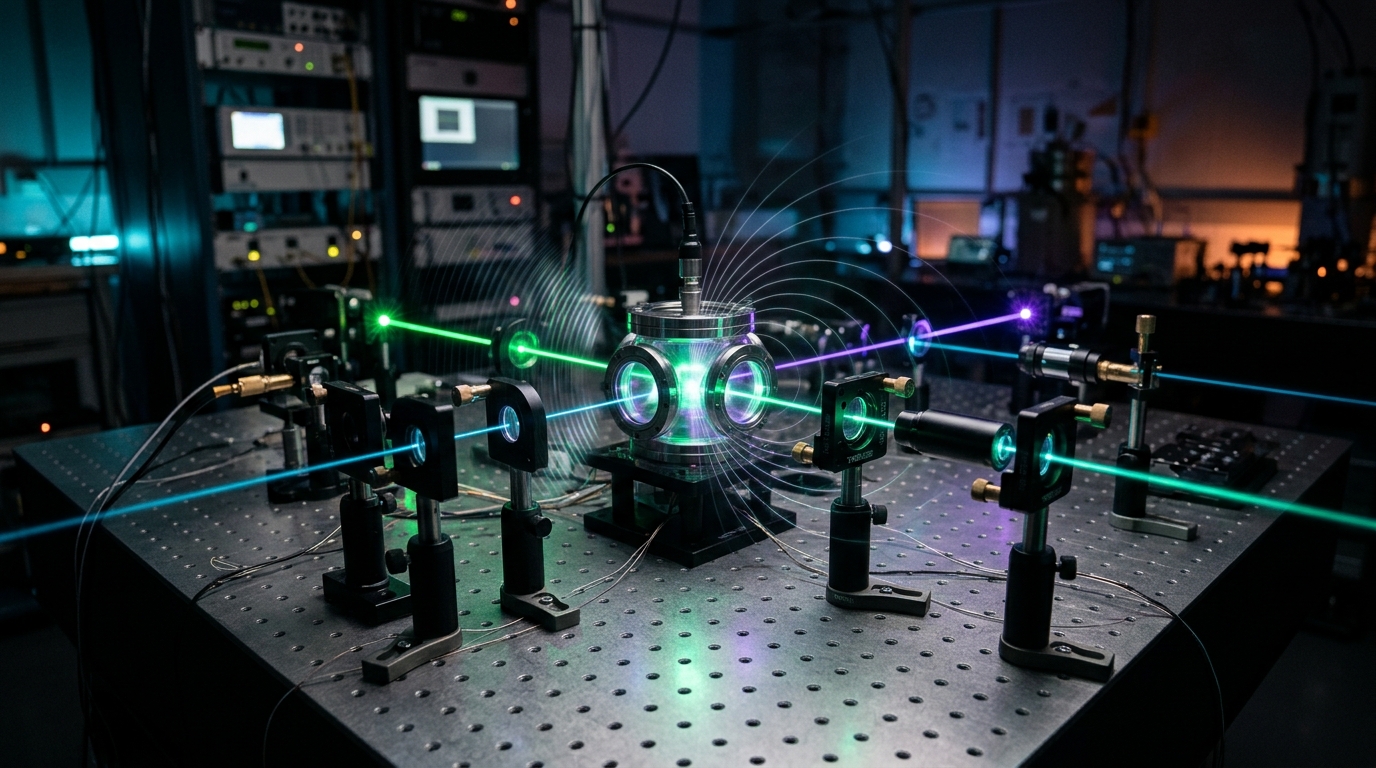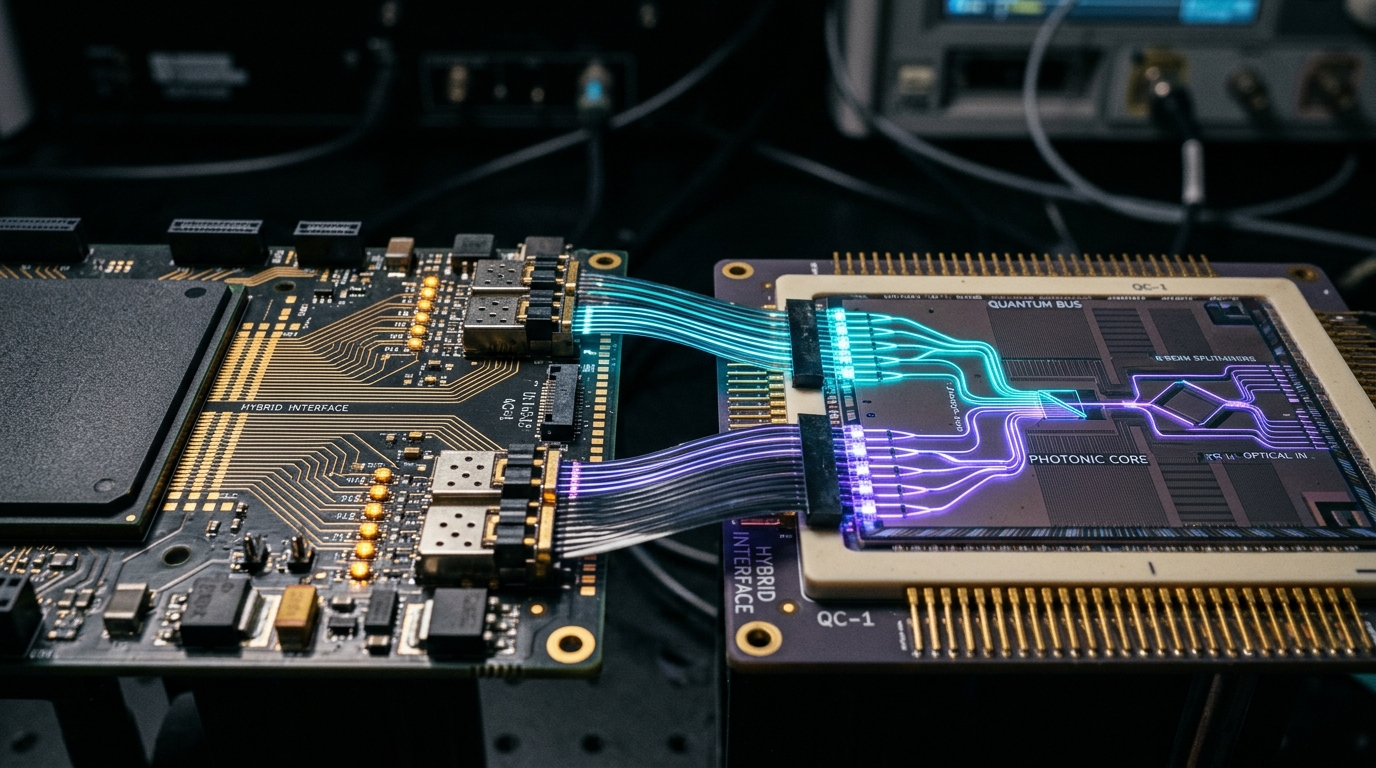
Quantum computers need more than powerful processors. They need carefully controlled physical environments and researchers are discovering that even something as fundamental as “cooling” a quantum system is surprisingly difficult.
As quantum computing moves from laboratory experiments toward larger and more practical machines, researchers are confronting challenges that go beyond qubit count and error correction. One of those challenges is thermalization: preparing a quantum system in a stable, low-energy state that behaves like a system in thermal equilibrium.
A recent study highlighted by Quantum Zeitgeist explores why reproducing this seemingly natural process inside a quantum processor is much harder than it appears.
Why Do Quantum Systems Need Cooling?
Many quantum computing architectures operate under carefully controlled environmental conditions to protect qubits from unwanted interactions and noise. For superconducting quantum computers, for example, extremely low temperatures are required to maintain the physical conditions in which superconducting qubits can operate effectively. But cooling a quantum system is not simply about lowering its temperature.
Researchers also need to prepare the quantum state in a controlled way. The system must be able to lose energy and approach the desired thermal or low-energy state without introducing additional errors or unwanted quantum behavior. This is where the problem becomes much more complicated.
The Problem With a Small Quantum “Bath”
In nature, objects can exchange energy with enormous environments. A hot object placed in a large room, for example, can gradually release heat into its surroundings. Statistical mechanics generally assumes that the environment or thermal bath is much larger than the system being studied.
For a quantum processor, however, the available bath can be relatively small. The researchers describe the challenge in terms of the number of degrees of freedom in the system and its bath. Ideally, the bath should be substantially larger than the system. When that condition is not met, the quantum system may not simply settle into equilibrium.
Instead, it can experience recurrences, where energy and information that were transferred to the environment can effectively return to the system. That makes stable thermalization much harder to achieve.
Why Simply Adding More Qubits Isn’t the Answer
One might assume that increasing the number of auxiliary qubits could solve the problem. But scaling the bath itself introduces additional hardware and control requirements.
Quantum processors already face major challenges involving connectivity, control electronics, error rates and physical scaling. Building a sufficiently large environment around the computational system can therefore become impractical.
This creates an interesting engineering problem:
How can researchers make a relatively small quantum system behave as though it is connected to a much larger environment?
One promising direction is to repeatedly reset auxiliary qubits.
What This Means for Quantum Computing
The importance of this research extends beyond cooling. Preparing accurate thermal states is useful for quantum simulations of real-world physical systems.
Materials science, chemistry, condensed-matter physics and other fields frequently involve systems that exist at finite temperatures rather than only in their ground states.
If quantum computers are eventually going to simulate these systems accurately, researchers need practical ways to prepare and control thermal quantum states. That makes thermal-state preparation an important component of the broader quantum simulation stack.
From Cooling Problems to Hardware Architecture
The research also highlights a larger issue facing the quantum industry. Quantum computing is not only a race to build processors with more qubits. The surrounding architecture matters just as much.
Cooling, control electronics, connectivity, error correction, state preparation and measurement all influence whether a quantum processor can become a useful computing system. For cryogenic architectures, this means that the cooling infrastructure itself becomes an important part of the scaling challenge.
Recent developments across the industry illustrate this trend. IBM, for example, has been working on modular cryogenic architectures designed to connect multiple quantum processors while maintaining extremely low operating temperatures. The direction is clear: scaling quantum computing requires scaling the infrastructure around the qubits, not just the qubits themselves.
Could Different Quantum Architectures Avoid Some of These Challenges?
This is one reason the quantum industry is exploring multiple hardware approaches.
Superconducting qubits are not the only path being investigated. Neutral atoms, trapped ions, photonic systems and other architectures approach quantum information processing from very different physical principles. Each architecture has its own advantages and engineering challenges.
Photonic approaches, for example, leverage room-temperature photonic quantum computing and telecommunications infrastructure, questioning whether quantum computing truly requires cryogenics. Other architectures may offer advantages in coherence, connectivity or operating conditions. There is unlikely to be a single solution to every quantum-hardware problem.
Instead, the future may involve different architectures optimized for different applications.
Conclusion
The next generation of quantum computers will require much more than increasing the number of qubits. Researchers need practical solutions for preparing states, controlling interactions, reducing errors and scaling the physical infrastructure surrounding the processor.
The work on quantum thermal-state preparation is a reminder that some of the hardest problems in quantum computing are not necessarily about computation itself. They are about how we control the physical world in which quantum computation takes place.
As quantum hardware continues to scale, innovations in cooling, thermalization, control and architecture could become just as important as breakthroughs in qubit technology.
Source: Quantum Zeitgeist *“Cooling Quantum Systems Is Harder Than It Looks, Study Explains”. * Published: August 31, 2026